Picture a distribution centre on a Western Sydney estate at 2am: a fence line 400 metres long, high value stock in the yard, and someone who has already checked the fence twice this month. Industrial intruders are rarely opportunists who wander past an open gate. They arrive with bolt cutters, they target specific assets, and they often come back if the first attempt fails. A standard boundary fence only marks a property line, and it will not stop a determined person who wants inside your yard.
When an asset demands the highest level of physical containment, palisade fencing for industrial sites is chosen because it is hard to climb, hard to cut and slow to get through, which buys the time that cameras, alarms and guards need to respond.
This article covers what makes a site high risk, how palisade resists deliberate intrusion, why it holds up in harsh weather, and where it fits into a complete perimeter security plan across New South Wales and the ACT.
An industrial site is classified as high risk when its stored assets, operational value or location attract targeted breaches rather than random trespassing. Stock and plant left in open yards overnight, copper cabling and metal at utilities and construction compounds, fuel and vehicles at transport depots, and sensitive equipment and data at data centres all draw intruders who know the value of what is inside.
Vulnerability also comes from the physical layout of the property itself. Long fence runs are difficult for guards to watch constantly, sites sit empty on weekends and holidays, boundaries back onto bushland or rail corridors, and busy gates used by trucks all day create blind spots. A high risk site is defined by the threat it faces and the cost of a breach, not simply by the total acreage of the land.
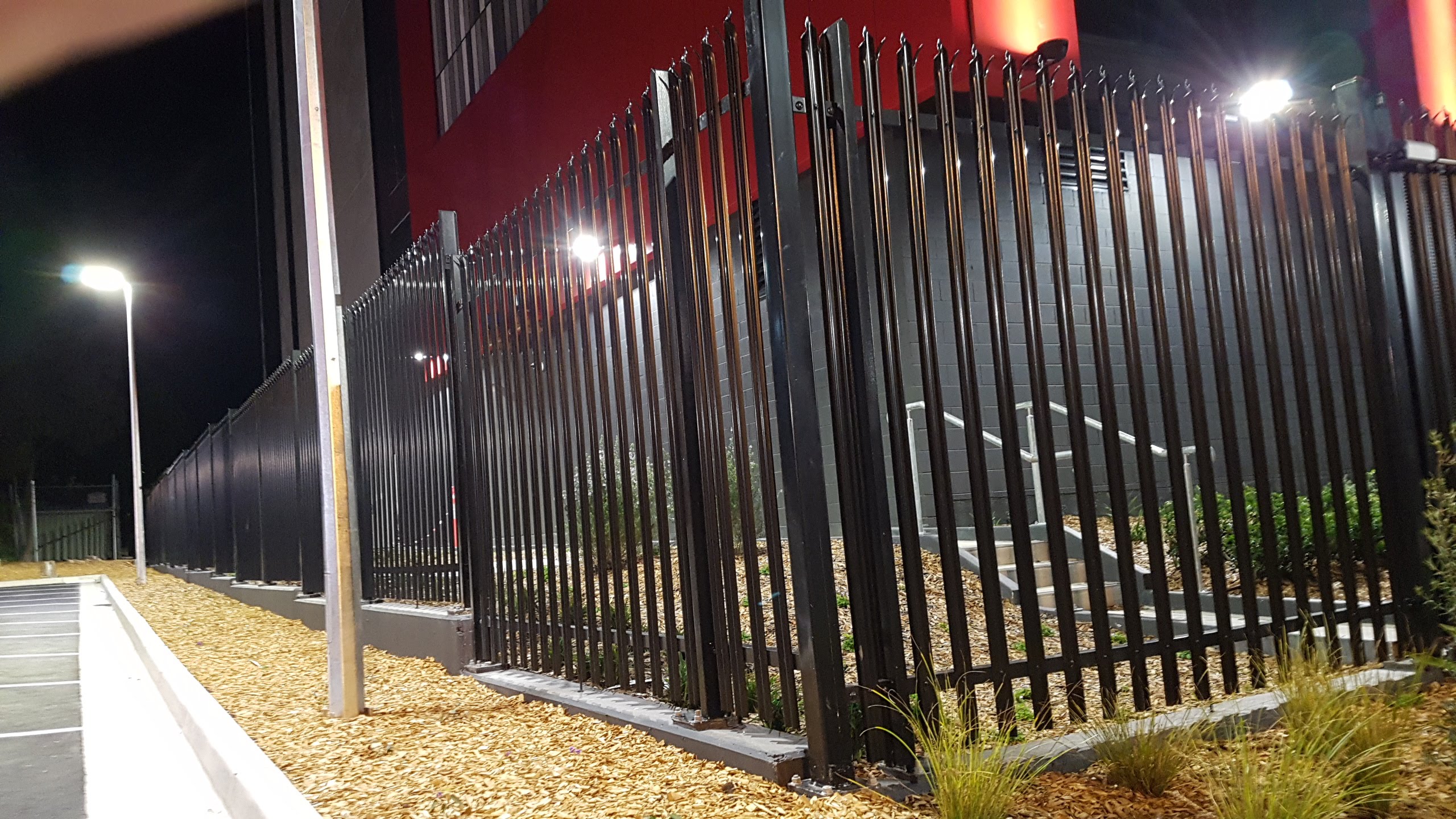
High security palisade fencing provides climb resistant fencing through its close-set pales, pointed tops and thick steel construction, helping delay deliberate intrusion.
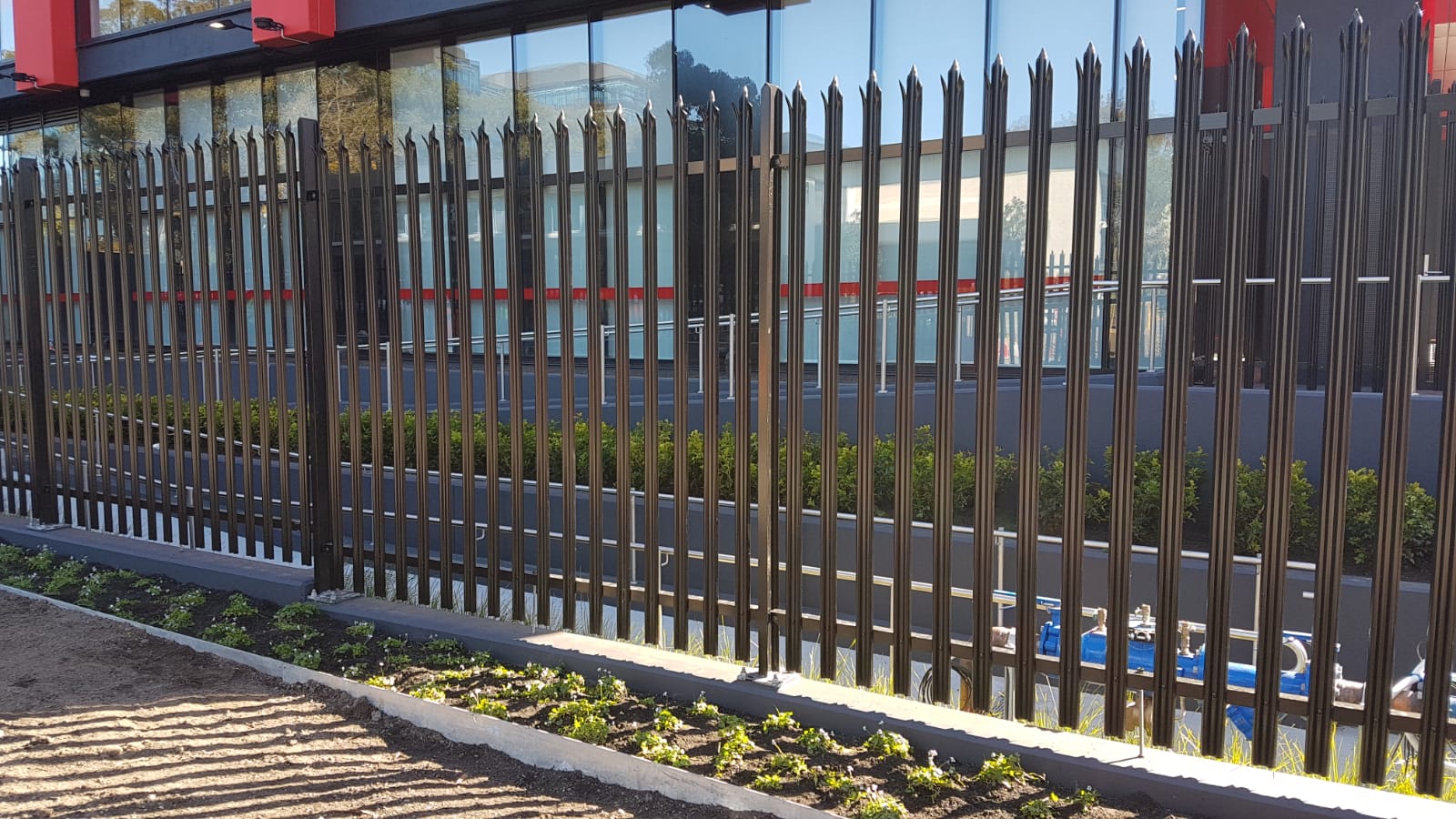
The vertical pales in a W pale palisade fence are set close together, leaving little room to gain a foothold or grip, while the pointed tops make the fence harder to climb. Standard heights of 2,400, 2,700 and 3,000 mm establish a vertical barrier that deters scaling, while readers wanting detail on top styles can check how W pale profiles and top styles work.
Each pale is cold rolled steel 3 mm thick with a W shaped section, which resists bending and makes a single cut useless because the next pale is right beside it. This contrasts with chainwire, where one cut can open a gap large enough to walk through.
Palisade acts primarily as a delay barrier within a security system that relies on deter, detect, delay and respond. The open vertical design keeps CCTV sightlines clear along the fence line, allowing cameras to monitor movement without obstruction. To explore broader options, you can view the high security fencing range.
Steel palisade holds up against industrial wear because its structural components are engineered to absorb physical impacts and ground movement without losing integrity.
Forklift and truck knocks near loading docks, heavy wind loads on tall runs, and ground movement on cut and fill estates test every metre of a boundary. Palisade posts use solid steel sections with cast in, surface mounted or side fixed options, and telescopic rails let the fence follow sloping ground without gaps underneath. Closing base gaps stops intruders from crawling under and prevents soil erosion on sloping Western Sydney lots.
Corrosion resistance ensures a long service life in harsh environments. Components are hot dip galvanised to AS/NZS standards, with optional powder coat finishes for coastal locations or specific corporate branding, and Summit quotes a typical service life of 20 years or more with minimal maintenance. For maintenance schedules and protection details, see the warranty and maintenance information.
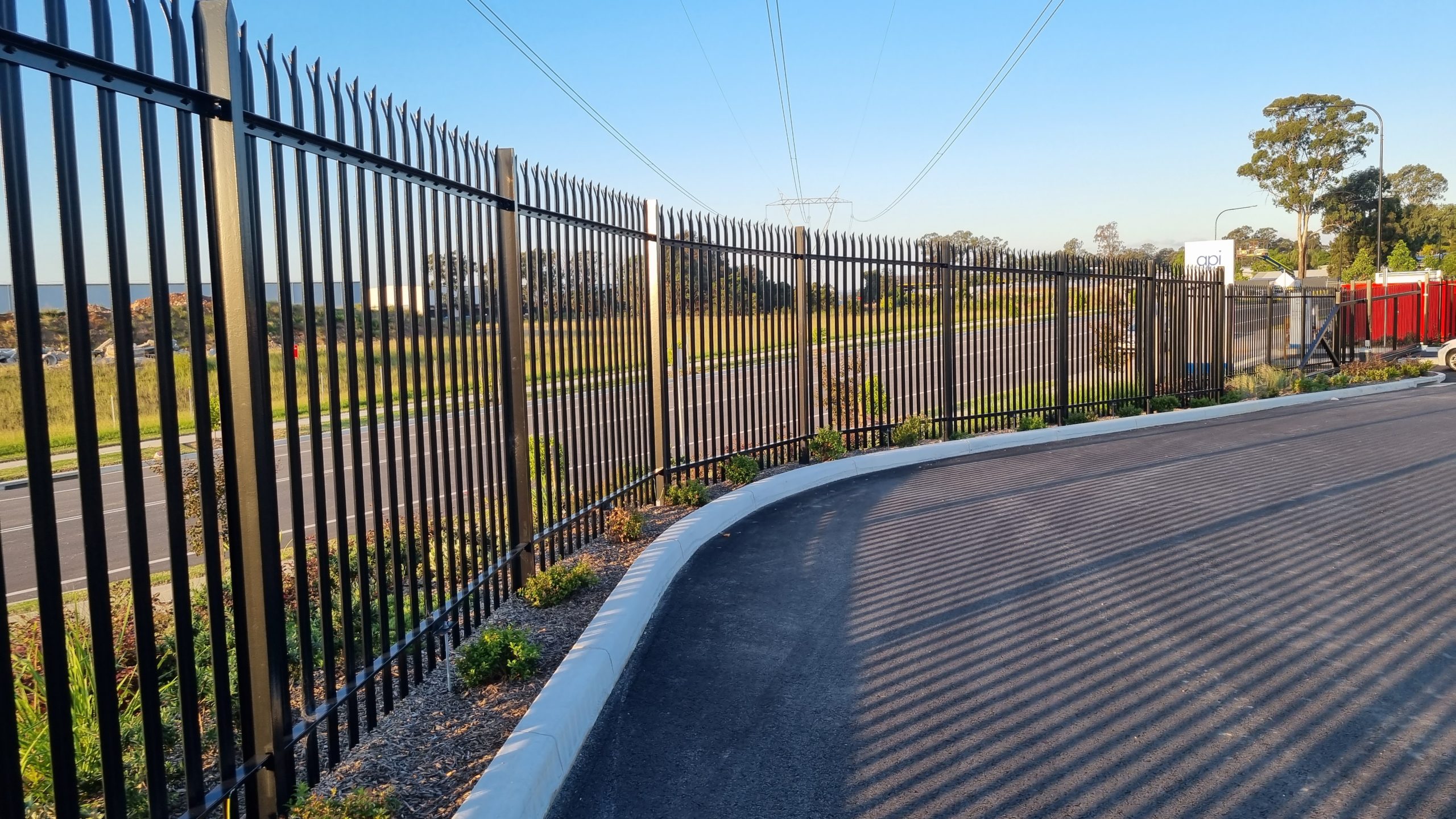
Palisade is not required on every property boundary, but it earns its cost where the threat of deliberate intrusion is high and the consequences of a breach are severe.
A palisade line is only as strong as its access points, so matching palisade swing or slide gates with gate automation keeps the same height and security level across driveways. Many industrial sites combine palisade on exposed street and rear boundaries with 358 high security mesh where finer visibility matters, or tubular fencing on public facing frontages, as outlined when you compare security fencing options for industrial properties.
The industrial growth corridors of Western Sydney, including Eastern Creek, Marsden Park, Kemps Creek, Moorebank and Horsley Park, are filling with large warehouses, data centres and logistics hubs built on new estates with long open boundaries and little passing traffic at night. Commercial and industrial builders frequently face strict council and insurance security requirements on these expansive, isolated perimeters, making robust physical barriers essential.
Summit has supplied and installed palisade fencing for industrial sites across these precincts, including the API facility at Marsden Park built with Richard Crookes Constructions, and the CDC Data Centres campus at Eastern Creek built with Hindmarsh Construction.
For projects requiring perimeter security fencing in Sydney, Summit supplies and installs perimeter solutions across all regions of NSW and the ACT.
Planning a secure perimeter starts with identifying which sections of the site face the highest risk of industrial security fencing, which vehicle gates manage the heaviest daily traffic, and whether the project specification calls for BS 1722 Part 12 (2006) compliance.
Summit handles design, manufacture and installation as a single contractor, backed by over 25 years of experience delivering commercial and industrial perimeters across New South Wales. To review site requirements and plan your next project, you can book a site security assessment or browse the Palisade W Pale Fencing range.
Yes, palisade fencing is better suited for high risk industrial sites where the threat is deliberate. A single cut can open a gap in standard chainwire, whereas palisade’s solid steel W pales resist cutting and climbing. However, chainwire still serves well for internal divisions or low risk boundaries.
Standard industrial palisade fencing usually starts at a height of 2,400 mm. For high risk perimeters, substations, or data centres, heights of 2,700 mm or 3,000 mm are commonly specified to deter scaling, and custom heights can be engineered for specific security clearances.
Steel palisade fencing has a typical service life of 20 years or more when components are hot dip galvanised to AS/NZS standards. Additional powder coating can be applied for extra corrosion protection in coastal zones or areas exposed to severe weather.
Summit Fencing supplies and installs industrial palisade fencing, gates, and security perimeters across all regions of New South Wales and the Australian Capital Territory, managing projects from initial site establishment to final handover.




 Support
 Contact Us
 Projects
 Products